

A sudden inability to breathe is terrifying. Choking can happen quickly and silently. Knowing what to do can save a life. This guide provides essential first-aid steps. You can make a critical difference.
Choking occurs when an object blocks the airway. Many people confuse it with coughing. A person who is choking cannot speak, cough, or breathe. They may clutch their throat. Their face might turn blue.
Universal Choking Sign
The universal choking sign is distinct. A person holds their hands to their throat. This signals distress. It means they need immediate help. Do not wait to act.
Partial vs. Complete Airway Obstruction
A partial obstruction allows some air passage. The person might cough forcefully. Encourage them to keep coughing. This can dislodge the object. A complete obstruction means no air moves. This requires immediate intervention.
First Aid for Conscious Adults and Children
For conscious adults and children, swift action is crucial. You will use a combination of back blows and abdominal thrusts. This aims to dislodge the obstructing object. Stay calm and act confidently.
Administering Back Blows
Stand to the side and slightly behind the person. Support their chest with one hand. Lean them forward at the waist. Their head should be lower than their chest. Deliver five sharp blows between their shoulder blades. Use the heel of your hand.
Witnessing a choking incident is stressful. Imagine a friend struggling at dinner. Their eyes widen, their hands fly to their throat. This is your cue to act. Do not hesitate.
Performing Abdominal Thrusts (Heimlich Maneuver)
If back blows do not work, move to abdominal thrusts. Stand behind the person. Wrap your arms around their waist. Make a fist with one hand. Place it just above their naval. Grasp your fist with your other hand.
Give five quick, upward thrusts. This compresses the abdomen. It forces air from the lungs. This air pressure can expel the object. Continue alternating back blows and abdominal thrusts. Do this until the object comes out. Or until the person becomes unresponsive.
Modifying Thrusts for Special Populations
Some individuals require modified thrusts. Pregnant people need chest thrusts. So do very large individuals. Perform these thrusts on the breastbone. Stand behind them. Place your hands midway up their chest.
For individuals in wheelchairs, perform chest thrusts. Position yourself behind them. Reach around to their chest. Apply firm, quick pressure. Adapt your technique as needed.
First Aid for Choking Infants

Infant choking procedures differ from adults. Never use abdominal thrusts on infants. Their internal organs are very delicate. Always use back blows and chest thrusts.
Infant Back Blows
Lay the infant face down. Rest them across your forearm. Support their head and neck. Their head should be lower than their chest. Deliver five gentle but firm back blows. Use the heel of your hand. Strike between their shoulder blades.
Think of an infant like a fragile package. Handle them gently but confidently. Each movement has a purpose. These precise actions can save their life.
Infant Chest Thrusts
If back blows fail, switch to chest thrusts. Turn the infant face up. Support their head and neck. Place two fingers on their breastbone. This is just below the nipple line. Give five quick chest thrusts. They should be about 1.5 inches deep.
Continue alternating back blows and chest thrusts. Do this until the object clears. Or until the infant becomes unresponsive. Do not stop until help arrives.
Infant CPR (If Unresponsive)
If an infant becomes unresponsive, start CPR. Carefully place them on a firm surface. Begin chest compressions. Use the one-hand or two-thumb technique. Check their mouth for the object. Only remove it if you see it.
When the Person Becomes Unresponsive
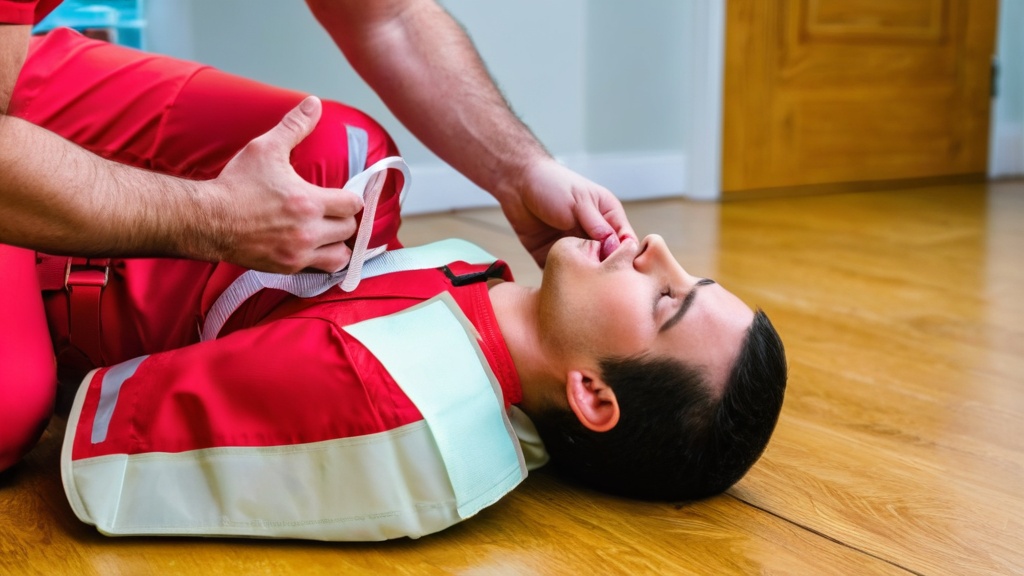
If a conscious person becomes unresponsive, immediate actions change. You must initiate CPR. Call for emergency medical help first. Yell for someone to call 911.
Initiating CPR
Carefully lower the person to the ground. Start chest compressions. Perform 30 compressions. Then check their airway. Look for the obstructing object. If you see it, try to remove it. Do not blindly sweep their mouth.
After checking, attempt two rescue breaths. If breaths do not go in, reposition the head. Try again. Continue cycles of compressions and breaths. Persist until help arrives or the person recovers.
Repeated Airway Checks
During CPR, regularly check the airway. After each set of compressions, look inside. If the object becomes visible, remove it gently. Do not push it deeper. This could worsen the obstruction.
Important Considerations and Safety Tips
| Step | Action | Details | Duration/Frequency |
|---|---|---|---|
| 1 | Assess the Situation | Check if the person can cough, speak, or breathe | Immediate |
| 2 | Encourage Coughing | Ask the person to cough forcefully to expel the object | Until obstruction clears or worsens |
| 3 | Back Blows | Deliver 5 firm blows between the shoulder blades with the heel of your hand | 5 blows per cycle |
| 4 | Abdominal Thrusts (Heimlich Maneuver) | Perform 5 abdominal thrusts by applying upward pressure above the navel | 5 thrusts per cycle |
| 5 | Repeat Cycles | Alternate 5 back blows and 5 abdominal thrusts until object is expelled or person becomes unconscious | Repeat as needed |
| 6 | Call Emergency Services | Call 911 or local emergency number if obstruction persists or person loses consciousness | As soon as possible |
| 7 | Unconscious Person | Begin CPR and check airway for obstruction before breaths | Until help arrives or person recovers |
Learning choking first aid is empoweriing. However, certain considerations are key. Always prioritize safety. Remember to call for help.
Calling Emergency Services
Always call 911 (or your local emergency number). Do this immediately. If you are alone, call then start first aid. If someone else is present, designate them to call. Early professional help improves outcomes.
Anti-Choking Devices
The FDA has issued warnings about anti-choking devices. These are not approved for over-the-counter sales. Traditional back blows and abdominal thrusts are the standard. Always use established protocols first. Only consider these devices if standard methods fail. Their effectiveness is unproven. Their use may delay proper care.
When to Seek Medical Attention After a Choking Incident
Even if the object is dislodged, seek medical attention. The person may have injuries. This includes rib fractures or organ damage. A medical professional should assess them. This ensures there are no lingering issues.
Think of it like a car accident. Even if you drive away, a mechanic should check the car. Similarly, a doctor should check the body. There might be hidden damage.
Preventing Choking
Prevention is always the best approach. Cut food into small pieces. Chew food thoroughly. Avoid talking or laughing with food in your mouth. Supervise children closely during meals. Keep small objects away from young children.
These simple steps dramatically reduce risk. Educate yourself and your family. A proactive approach is safest. Small changes can prevent a crisis.
FAQs
What are the first steps to take if someone is choking?
The first steps include encouraging the person to cough forcefully to try to clear the obstruction. If they cannot breathe, speak, or cough, call emergency services immediately and prepare to perform first aid.
How do you perform the Heimlich maneuver on an adult?
Stand behind the person, wrap your arms around their waist, make a fist with one hand, place it just above the navel, grasp it with your other hand, and deliver quick, upward abdominal thrusts until the object is expelled or the person can breathe.
What should you do if the choking person becomes unconscious?
If the person becomes unconscious, carefully lower them to the ground, call emergency services if not already done, and begin CPR starting with chest compressions. Check the mouth for any visible obstruction before giving breaths.
Can you perform choking first aid on yourself if you are alone?
Yes, you can perform self-administered abdominal thrusts by using your fist or pressing your abdomen forcefully against a hard surface like the back of a chair to try to expel the obstruction.
When should you seek medical attention after a choking incident?
Seek medical attention immediately if the person has difficulty breathing, persistent coughing, chest pain, or if the obstruction was not fully cleared. Even if symptoms improve, a medical evaluation is recommended to ensure no internal injury occurred.